
Best Weekly Book Review of Wolf Hour by Jo Nesbo

Wolf Hour by Jo Nesbo, Is a Crime Novel That Refuses Easy Answers
Affiliate Disclosure
Some links in this newsletter may be affiliate links. This means that if you choose to purchase a book through Amazon using one of these links, I may earn a small commission at no additional cost to you. This helps support the work behind this newsletter and allows me to keep sharing independent book recommendations.
Wolf Hour by Jo Nesbo, Summary
Why This Book, Why Now
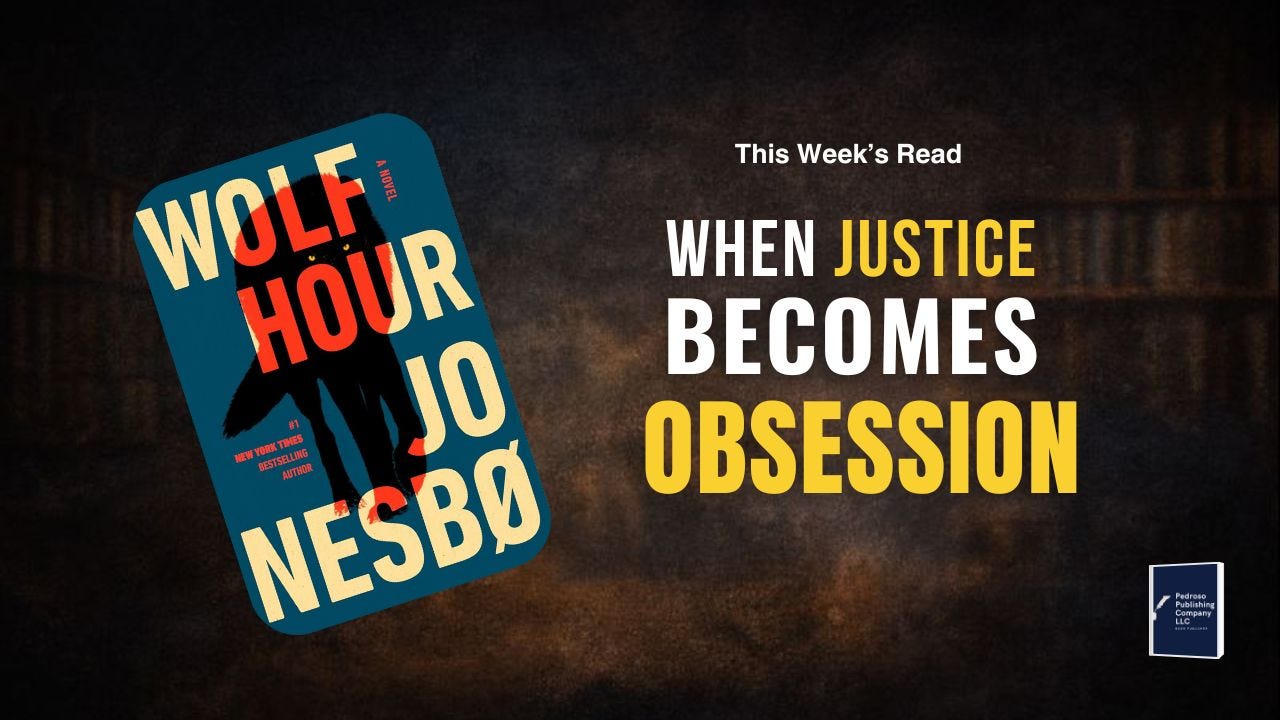
Wolf Hour arrives at a moment when many readers are tired of crime fiction that treats violence as spectacle or detectives as uncomplicated heroes. This novel leans into uncertainty instead. It explores what happens when justice becomes personal, when obsession masquerades as duty, and when solving a crime does not restore order so much as expose how fragile it always was.
The Story at Its Core
At the center of the novel is Detective Bob Oz, a man already splintered by grief before the case begins. He is impulsive, angry, and emotionally raw, and the book makes no attempt to soften him for reader comfort. The investigation into a serial killer unfolds alongside Oz’s own psychological deterioration, until it becomes difficult to separate the pursuit of truth from self-destruction.
Character Over Cleverness
This is not a novel driven by flashy twists or puzzle-box plotting. Its power comes from character. Oz is compelling precisely because he is unreliable, because his moral compass wavers, and because his pain actively shapes the investigation. The antagonist, too, is unsettling not through excess, but through plausibility. The novel suggests that the most frightening violence is not monstrous, but human.
Structure and Atmosphere
The shifting timelines and perspectives create the feeling that the story is being reconstructed after the fact. This structure reinforces one of the book’s key ideas: crimes do not end when they are solved. They echo forward, altering memory, identity, and meaning. The atmosphere is tense and bleak, but controlled, with restraint doing more work than shock.
What This Book Is Not
Wolf Hour is not a comforting procedural, not a fast-paced thriller built for casual skimming, and not a story that offers moral clarity as a reward. It demands attention and emotional stamina. Readers looking for likable heroes or clean resolutions may struggle. Readers who value psychological depth and ethical complexity will likely be absorbed.
Who This Book Is For
This book will resonate most with readers who appreciate crime fiction that interrogates violence rather than exploiting it, and who are comfortable sitting with unresolved questions. It’s for those who believe that the best thrillers don’t just entertain, but unsettle.
Final Thoughts
Wolf Hour lingers because it refuses to reassure. Long after the final page, what remains is not the solution to the crime, but the cost of pursuing it. In choosing ambiguity over closure, the novel trusts its readers to think, to feel, and to question. That trust is what makes it memorable.
Weekly Tip: Finish the Book First
The 3 Things That Actually Make It Happen
Set a non-negotiable writing schedule
Waiting for time or inspiration is the fastest way not to finish. Decide when you write, how often, and for how long, and treat it like an appointment you don’t cancel.Lower the bar for the first draft
Your job is not to write a good book at first, but to write a complete one. Permission to write badly is what gets you to the end; quality comes during revision.Separate writing from editing
Finish the draft before you start fixing it. Editing too early is a form of procrastination that feels productive but keeps the book unfinished.
These three habits matter more than talent, tools, or publishing knowledge at this stage.
QueryTracker
QueryTracker — a free, practical tool for authors pursuing traditional publishing. It helps you research agents, track submissions, see response times, and avoid querying blindly. Even for writers still drafting, it clarifies what the next step actually looks like once the book is finished.
Why use QueryTracker:
It saves time by centralizing agent research instead of juggling spreadsheets and bookmarks.
It helps you query strategically, not randomly, by showing who represents your genre and how they respond.
It sets realistic expectations through visible response times and outcomes from other writers.
How to get the most out of it:
Filter agents strictly by genre and age category before querying.
Track every submission so you can see patterns instead of guessing.
Use response data as information, not judgment, to refine your query list over time.
QueryTracker:
https://querytracker.net/
— a comprehensive online tool to search for literary agents, organize your submissions, and track your progress when pursuing traditional publishing.