
Why Everyone Should Have a Vision Board

Why Everyone Should Have a Vision Board
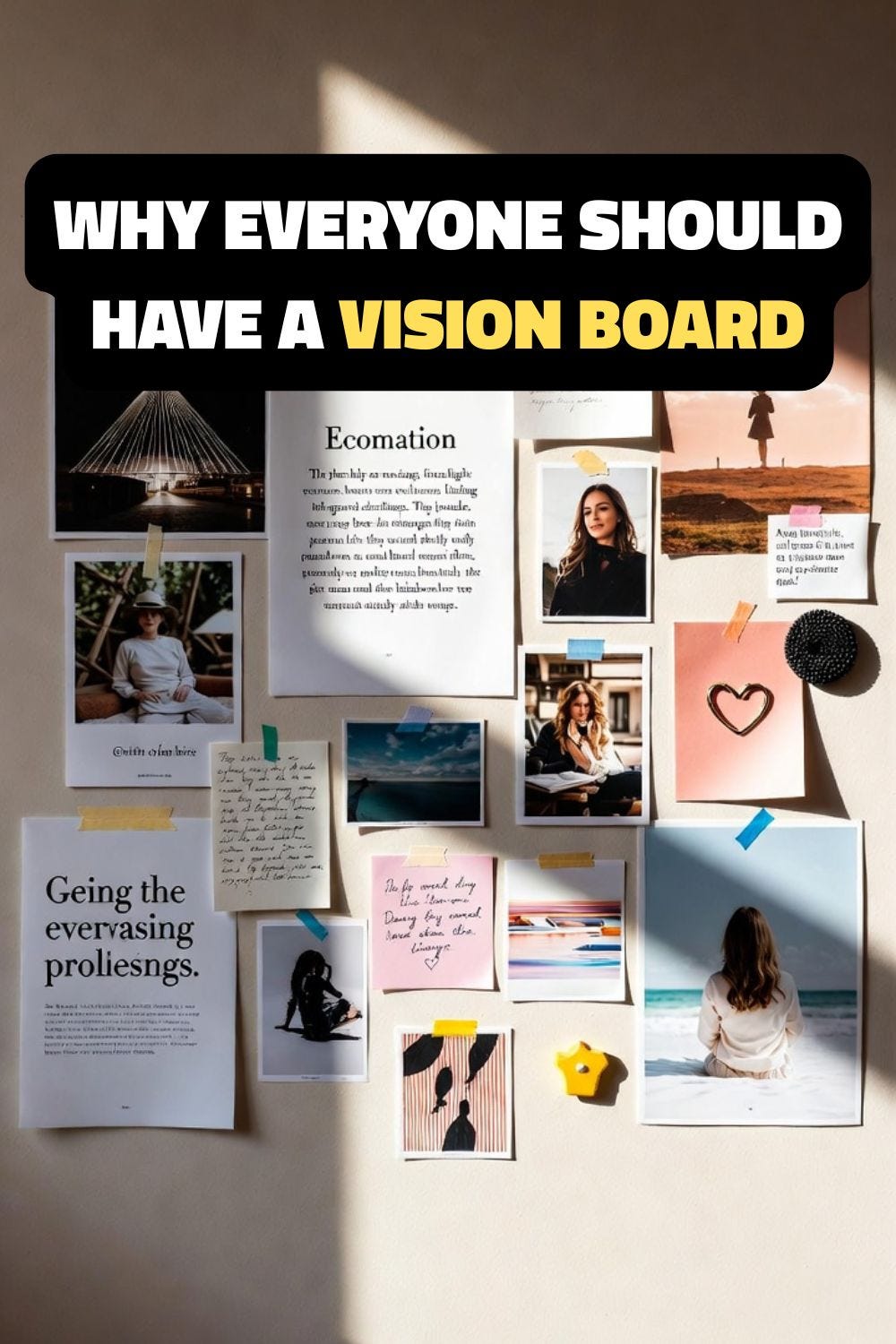
A vision board is not reserved for dreamers or creatives; it is a practical tool for anyone navigating complexity. Modern life constantly demands attention, decision-making, and emotional energy. Without a clear internal compass, it is easy to drift—reacting instead of choosing. A vision board provides that compass by making priorities visible and emotionally grounded.
One of the most overlooked benefits of a vision board is focus. Every day, people make hundreds of small decisions that shape long-term outcomes. When goals are visually reinforced, those decisions become easier. You are more likely to protect your time, energy, and boundaries when you are reminded of what truly matters. The board does not force discipline; it supports it.
Vision boards also influence identity, not just outcomes. When you repeatedly see images that reflect who you want to become, your self-perception begins to shift. You stop seeing goals as distant achievements and start seeing them as natural extensions of who you are becoming. This identity alignment is what makes long-term change sustainable rather than exhausting.
Another reason everyone should have a vision board is emotional regulation. Motivation fluctuates, but emotional connection endures. On difficult days, a vision board does not demand productivity—it offers perspective. It reminds you why effort matters, even when progress is invisible. That reminder can be enough to keep you moving forward calmly instead of quitting impulsively.
Ultimately, a vision board is not about control; it is about clarity. It doesn’t guarantee results, but it dramatically improves the odds by reducing internal confusion. In a world that constantly pulls attention outward, a vision board brings it back inward—where meaningful direction begins.