
Why People Started Using Vision Boards

Why People Started Using Vision Boards
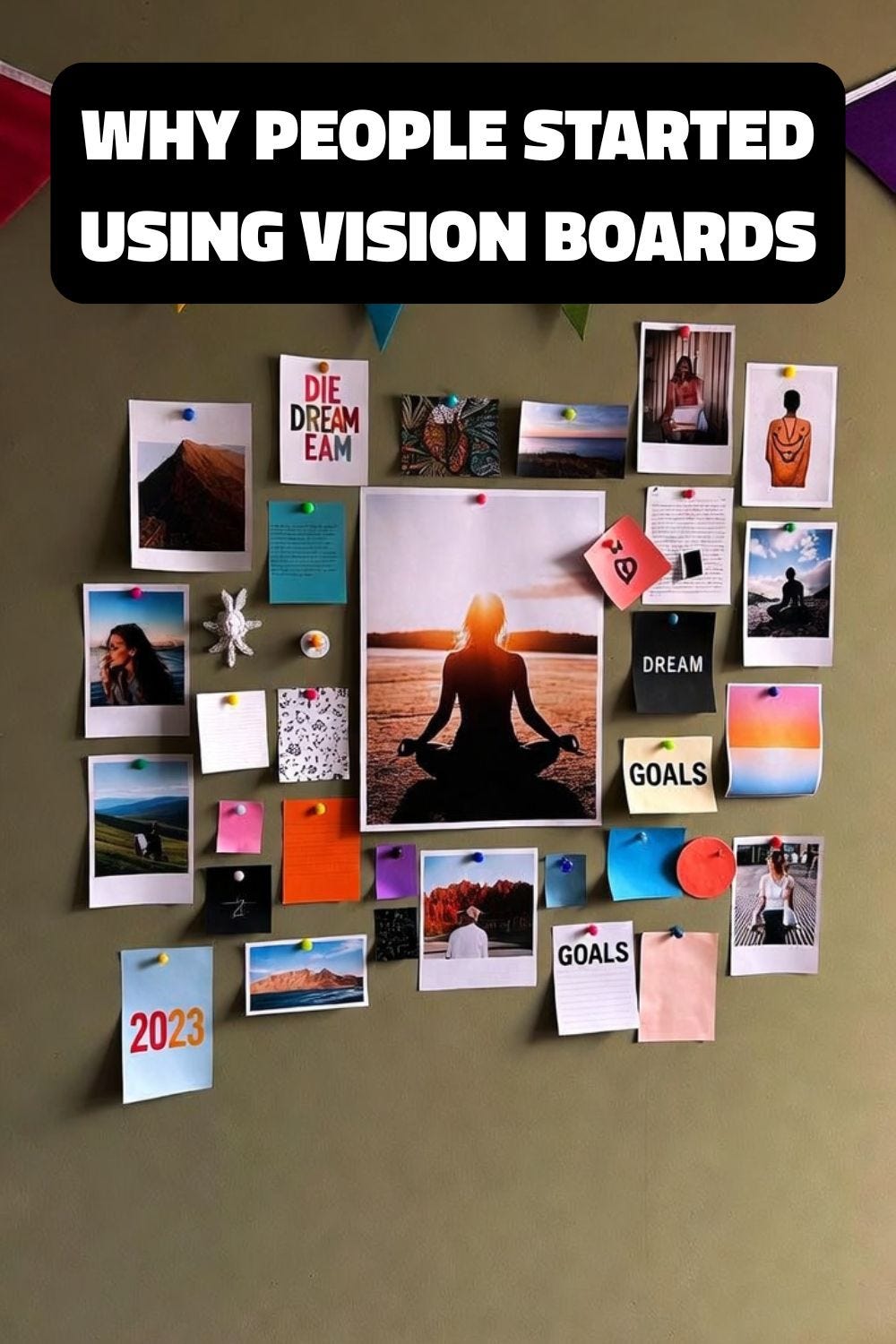
People began using vision boards because imagination alone often felt unreliable. Goals lived in the mind, but daily life had a way of drowning them out. Responsibilities, fear, routine, and distraction slowly pushed intentions into the background. Vision boards emerged as a way to anchor abstract dreams into something visible and persistent—something that could not be ignored.
Another reason vision boards gained popularity is that they helped people move from vague wishes to defined direction. Saying “I want to be successful” means very little to the brain. Seeing images that represent freedom, stability, creativity, or achievement creates specificity. The brain responds better to concrete cues than to abstract language, and vision boards provided those cues in a simple, accessible format.
Emotion also played a critical role. People didn’t just want to plan logically; they wanted to feel connected to what they were working toward. Images bypass rational resistance and trigger emotional engagement. A single photograph can generate excitement, hope, or determination far more effectively than a written goal. That emotional charge made people more likely to stay committed when motivation naturally dipped.
Vision boards also offered reassurance during uncertainty. When progress felt slow or invisible, the board acted as a reminder that effort had direction. It helped people trust long-term processes instead of chasing instant results. In this way, vision boards became not just motivational tools, but psychological anchors—quiet, daily confirmations that actions today were connected to a future worth building.
Finally, vision boards spread because they were simple. They required no special skills, no permission, and no audience. Anyone could create one privately, without pressure or performance. That accessibility allowed the practice to cross industries, cultures, and generations. What started as a personal exercise gradually became a shared language for intention, clarity, and purposeful growth.